



Articles
On the Application of 3D Technologies in Construction
The forecast by scientists regarding the development of the demographic situation in the next 20 years indicates a rapid growth in the world's population. This can pose a serious challenge for the governments of many countries in providing comfortable living conditions for the growing generations, primarily in terms of housing. Based on data provided by the UN, in 15 years, the average daily housing demand for humanity will exceed 100,000 units, and by 2030, approximately 4 billion people from low-income populations (earning less than $3,000 per year) will be in urgent need of housing.
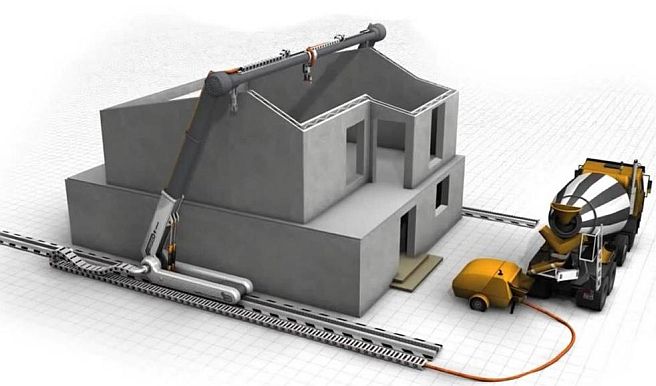
The impending threat, as optimists declare, will be averted with the help of innovative technologies in the construction industry. The most likely solution to the growing problem, according to experts, will be the application of 3D technologies: construction printers.
The impending threat, as optimists declare, will be averted with the help of innovative technologies in the construction industry. The most likely solution to the growing problem, according to experts, will be the application of 3D technologies: construction printers.
This solution, in their opinion, is the key to satisfying the rapidly growing housing needs of the general population. Optimism is backed by evidence from various sources: compared to traditional methods, the use of 3D printers in construction can reduce labor costs by up to 80%, and construction time can be cut by 60-70%.
Recently, 3D construction printers have been actively used in many countries.
Use of 3D Printers Worldwide
In August of last year, the company WinSun (China) officially announced the most extensive housing construction project to date using 3D technologies. The company claims that Chinese construction printers will "print" one and a half million residential houses in Saudi Arabia within five years.
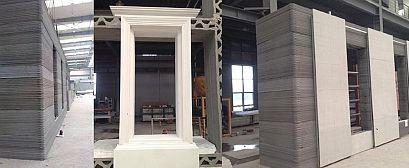
The company WASP (Italy) has developed and tested the largest construction printer to date. The device is a metallic structure with a height of 12 m, a width of 6 m, and a central extruder that "prints" the building frame layer by layer. Recently, with the help of this unique printer, a small space used as a shelter was "printed."
Currently, developers of the largest 3D printer plan to use it only for the construction of simple buildings, such as houses for migrants or people affected by natural disasters.
In the UAE (Dubai), the construction of an office building was completed using a printer – not only the frame but also the interior was finished using 3D technologies. The construction took 17 days, and the cost was $140,000. The new building will house the company that "printed" it, which, according to the administration, will be a symbol of Dubai's future.
Under the guidance of scientists from Eindhoven Technical University (Netherlands), a 3D construction printer has been developed that can "print" pea-sized parts. The 3DCP project is funded by ten companies and amounts to 650,000 euros. The uniqueness of the printer, according to the developers, lies in its rotating print head, allowing the creation of objects of any shape, limited only by dimensions: 11×5×4 m. Throughout 2017, the 3DCP developers plan to showcase their creation and work with builders for its most effective practical application.
The architectural company WATG Urban Architecture (USA) has designed the world's first structure of a special shape that, according to the authors, is most suitable for a construction printer. The building outline is presented by architects as a sphere with a wavy roof, harmoniously combining high technology and the surrounding nature. Construction of the "printed" house is scheduled to begin in 2017 in Chattanooga, Tennessee.
Bold and productive steps in the development and practical application of 3D printing technology are being taken in Switzerland, Denmark, and Japan.
In Russia, the exploration and development of virtual modeling in construction are carried out by individual innovators. Against the general conservative background, there is interesting news about the company Apis Cor, which has developed a 3D printer capable of "printing" a building with an area of up to 40 square meters in a day. The printer was tested in the Moscow suburb of Stupino. All elements of the building were "printed" directly on the construction site by a portable 3D printer operated by two people. The developer of the 3D construction printer, Russian engineer Chen-Yun-Tai, claims that the building has a warranty period of 175 years.
Many specialists are exploring new horizons, studying the possibilities of using 3D construction printers in the context of the Smart House concept – Smart Home. This concept should be considered as a comprehensive program that integrates all components of a modern home, its systems, and elements, including technological, economic, ecological, functional, and human factors.
Two main differences should be taken into account when considering a 3D construction printer compared to analogs used in other industries:
- Firstly, the dimensions of a 3D construction printer can vary – depending on the scale of the construction object – and can be comparable to the size of a small cargo truck or reach the dimensions of a powerful mobile crane.
- Secondly, a concrete plastic mixture is used as the main material in the construction 3D printer, which is supplied by the printer head. With the high-precision work of this head – the main part of the printer – various elements are erected: foundations, walls, stairs, openings, and technological holes for engineering communications.
In conclusion, it should be noted that the effective use of construction printers is currently limited. Their application can be successful only in performing certain types of work, such as the construction of monolithic structures.
Advantages and Disadvantages of Construction Printers
The main advantages of construction printers are minimal (compared to traditional methods) timeframes and the efficiency of logistics operations.As for the disadvantages:
- inability to integrate 3D technologies into the comprehensive process of construction, reconstruction, and repair;
- high cost of modern models of three-dimensional construction printers.
*Attention!
This article is the intellectual property of the "Novу Zodchу" group of companies and is protected by copyright law. When reprinting the article in whole or in part, attribution and an active (dofollow) hyperlink to the source are mandatory!